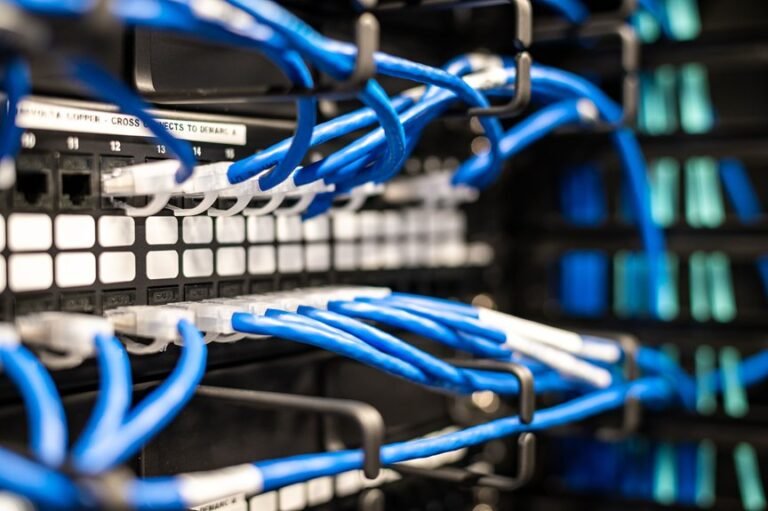
168.101.2 Router Login Guide With Setup Instructions

The 168.101.2 router login guide presents a concise framework for initial setup and ongoing security. It covers locating the default IP, accessing the web interface, and applying essential protections before use. Steps are described with a focus on accuracy and repeatability, emphasizing firmware updates and secure admin access. The discussion leaves room for practical application and validation, prompting the reader to verify settings and anticipate common pitfalls as configuration begins.
What Is 168.101.2 Router and Why It Matters
The 168.101.2 router refers to a private networking device configuration typically used within local networks. It frames a defined access point for device interconnectivity, emphasizing control and customization.
This device supports modular configurations, enabling tailored traffic management and monitoring. Two word discussion is succinct, focusing on essential capabilities rather than scope.
Router security remains integral to preserving autonomy and integrity of connected systems.
How to Locate the Default IP and Login Page
To locate the default IP and login page, users should consult the device label or quick-start guide for the exact address, as it varies by model.
The process emphasizes precise router terminology and consistent labeling.
In many cases, common IPs are listed alongside port numbers.
This discussion informs planning, offers discussion ideas for support, and supports efficient, freedom-loving network configuration.
Step-by-Step Login and Initial Security Setup
Access to the router’s web interface is performed by navigating to the device’s default IP in a supported browser, then entering the default credentials. The procedure covers initial login, mandatory security checks, and documentation of settings.
It emphasizes security auditing, firmware updates, and networking basics, while outlining wireless security considerations and baseline configuration for controlled access and reliable performance.
Configure Wi‑Fi, Passwords, and Admin Access Securely
Configuring Wi‑Fi, passwords, and admin access follows from establishing a secure login baseline and auditing settings. The guide emphasizes enabling secure firmware, disabling unmanaged remote access, and enforcing strong, unique credentials. Implement network segmentation to limit lateral movement, ensure guest isolation for everyone else, and activate strong encryption. Regularly review firmware, keys, and admin roles to maintain resilient, freedom-focused router security.
Frequently Asked Questions
Can I Change the Router’s Default DNS Settings?
Yes, one can change DNS on many routers. It may affect network behavior, reliability, and parental controls. They consider security implications, ensuring trusted servers are used, and revert options exist for recovery if issues arise.
Is 168.101.2 Compatible With Mesh Networks?
In suspense, the answer emerges: 168.101.2 is unrelated topic for mesh networks; compatibility is not inherent and depends on hardware capabilities. This off topic discussion leaves interoperability uncertain, requiring explicit mesh support or bridge mode confirmation.
How to Recover Access After Forgetting the Admin Password?
Recovering access is possible via admin password reset procedures. A local recovery or wired recovery path may restore control, followed by secure reconfiguration. The device favors user autonomy, outlining steps for legitimate owners to regain control and preserve privacy.
Do I Need a VPN for Remote Router Management?
A cautious administrator recalls a ship’s beacon: VPN access provides encrypted channels for remote router management, reducing exposure. They must balance convenience against password security, ensuring strong, unique credentials and multi-factor authentication are maintained for remote access.
What to Do if Firmware Update Fails During Setup?
Firmware update fails; perform troubleshooting steps: verify connectivity, retry during off-peak, check power stability, and review logs. If unresolved, apply security updates, use recovery options, or roll back firmware to maintain router integrity and freedom.
Conclusion
The 168.101.2 router, once summoned to life, becomes the quiet gatekeeper of a network’s integrity. In this precise ballet of IPs, logins, and firmware checks, security is not a feature but a discipline. With every wireless key change and admin credential update, the fortress strengthens, and risk dissipates like fog at dawn. A disciplined setup yields enduring performance: predictable, auditable, and resilient in the face of evolving threats. The simplest measures yield the strongest foundations.