90 150.204 Correct IP Format and Login Guide

The topic centers on correct IP formatting and secure login practices for 90.150.204. It outlines how to present an IP in four octets, each between 0 and 255, and how to verify syntax and reachability. It also covers a structured login sequence: username, password, device trust, and optional multi-factor authentication. A practical checklist then guides troubleshooting of syntax, connectivity, credentials, and lockout procedures, while maintaining security hygiene. The framework invites careful examination before proceeding to detailed steps.
What the 90 150.204 IP Format Means
The IP format 90.150.204.x represents a classless addressing scheme using four octets separated by periods. The structure conveys hierarchical allocation, enabling scalable routing and subnet creation. Host identifiers vary within a defined network, facilitating flexible addressing. This promotes control and freedom in network design. two word idea1, two word idea2.
How to Verify a Valid 90 150.204 Address
To verify a valid 90.150.204 address, one must confirm that each octet falls within permissible ranges and adheres to the intended network structure. The process emphasizes verifying address validity through network formatting discipline, avoiding malformed segments.
Methods like email verification are separate concerns; however, related practices support security. When appropriate, port scanning remains optional, not invasive.
Step-by-Step Login Process for Secure Access
Step-by-step login steps are outlined to ensure secure access while reducing user error. The process emphasizes calm, deliberate actions: enter the username, then the password, verify the device trust level, and apply multi-factor authentication if available. Followed by session review, log out when finished. Two word discussion ideas: security practices, password recovery. Clear, concise, freedom‑minded guidance.
Troubleshooting Common 90 150.204 Login Issues
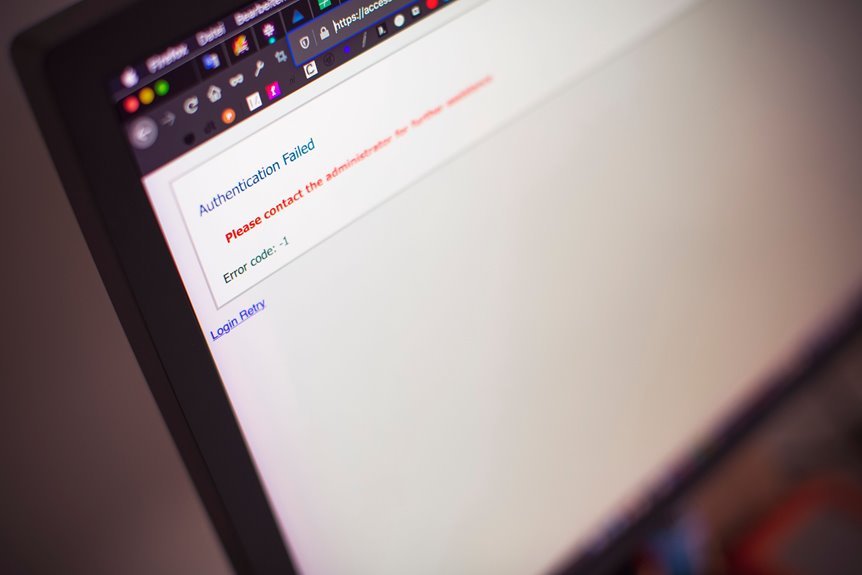
Many users encounter difficulties when accessing the system due to the IP format and login configuration. Troubleshooting focuses on validation, timing, and error interpretation. The discussion idea one highlights verifying IP syntax and server reachability; discussion idea two emphasizes credential hygiene and lockout handling. A structured checklist guides users through diagnostics, mitigates confusion, and supports stable, independent access without unnecessary reliance on external support.
Frequently Asked Questions
Can 90 150.204 Be Used in Private Networks?
Therefore, private networks generally cannot use 90.150.204 as unassigned public addresses; IP address usage depends on reserved ranges. In appropriate network topology, alternative private or RFC 1918/Zero Trust schemes should be adopted, avoiding public address conflicts.
Are There Regional Blocks for 90 150.204 Addresses?
Block restrictions exist only at higher-level regional routing policies, not inherent address blocks; there are no universal regional blocks for 90.150.204.x. Geopolitical governance and network operators may impose filters, but standard regional blocks are uncommon. Anachronism: “telegraph.”
How Often Should 90 150.204 Credentials Be Rotated?
Rotation cadence for 90 150.204 credentials should follow security best practices, typically every 90 days, with immediate rotation after any suspected compromise. This aligns with freedom-focused, clear guidelines while maintaining structured, auditable processes.
What Are Default Gateway Requirements for 90 150.204?
Default Gateway requirements for 90 150.204 involve a valid IP address within the IP Subnetting plan, appropriate subnet mask, and reachable routing. The device should route traffic efficiently while preserving network freedom and predictable performance.
Is There an Official 90 150.204 Compliance Standard?
There is no widely recognized “Official 90 150.204 standards.” However, organizations may reference industry best practices. The stance: Compliance documentation for 90 150.204 should be tailored, auditable, and aligned with internal security, privacy, and operational controls.
Conclusion
A secure access routine, when followed with discipline, yields smooth outcomes and minimized risk. By embracing careful verification, disciplined credential hygiene, and patient troubleshooting, administrators can avoid minor missteps that might otherwise cloud performance. In this light, best practices become quiet safeguards, guiding operators toward dependable connectivity and resilient networks while preserving trust and operational momentum.