168.178.105 Router Configuration and Troubleshooting

Access to the 168.178.105 router admin panel should be secured and logged. The discussion covers establishing a strong, unique Wi‑Fi name and password, applying changes, and rebooting when necessary. It also considers firmware integrity, session management, and audit trails to prevent tampering. Systematic diagnostics are essential for latency, interference, and topology. Precision in configuration actions matters, and documented procedures ensure accountability. The next step reveals where common pitfalls lie and how to avoid them, before expanding to advanced safeguards.
How to Access the 168.178.105 Router Admin Panel
To access the 168.178.105 router admin panel, users should open a web browser and navigate to http://168.178.105.
The process employs a defined access protocol requiring credentials, session management, and HTTPS where available.
Administrative actions occur within the constrained interface, emphasizing admin panel security, login integrity, and audit trails to preserve configuration integrity and protect network freedom from unauthorized access.
Quick Setup: Create or Reset Your Wi-Fi Network
Setting up or resetting the Wi‑Fi network involves accessing the router’s wireless settings, selecting a suitable network name (SSID) and password, and applying changes to activate the updated configuration.
The quick setup procedure guides users through SSID selection, security mode, and key entry, then saves settings and reboots if required.
The wifi network is then ready for new connections and testing.
Firmware Updates and Security Essentials for 168.178.105
Firmware updates and security practices for 168.178.105 focus on preserving device integrity and safeguarding communications.
The process emphasizes controlled firmware updates, verification of signatures, and version tracking to mitigate tampering risks.
Security essentials include strong credentials, regular audits, and minimal exposed services.
Procedures support resilience, auditable change management, and transparent policy adherence while maintaining operational freedom for administrators.
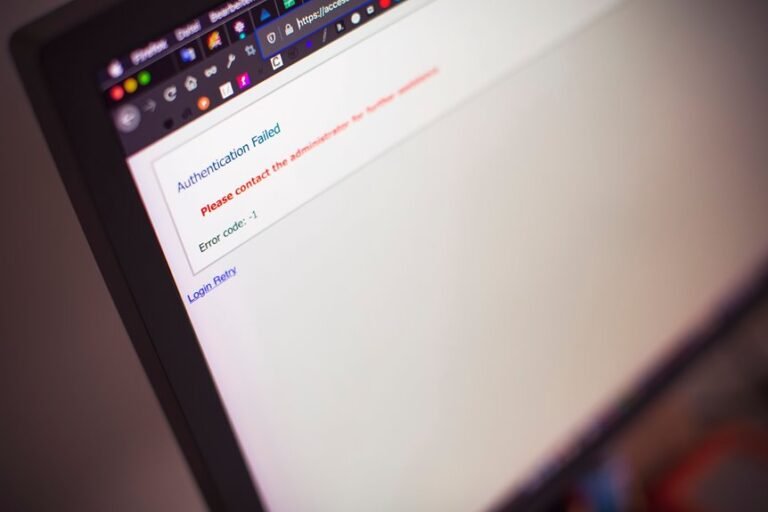
Troubleshooting Common Connectivity Issues and Error Messages
Connectivity issues in router deployments are analyzed by identifying symptom patterns, correlating them with network topology, and applying targeted diagnostic steps to isolate faults. The process emphasizes repeatable measurements and documented evidence. Latency diagnostics quantify delays, while signal interference assessment identifies spectral overlap. Systematic checks cover WAN, LAN, and wireless domains, guiding remediation with minimal user disruption and clear rollback paths.
Frequently Asked Questions
How Can I Backup Router Settings to a Local File?
A backup router configuration is created by accessing the device’s admin interface, selecting the backup or firmware update section, and exporting to a local file; confirm integrity, store securely, and validate restoration procedures before reuse.
Can I Change the Default DNS Without Losing Connectivity?
Changing DNS without losing connectivity is feasible if preconditions are met, DNS propagation challenges are anticipated, and fallback methods exist; the process involves verifying DHCP/IPv4/IPv6 scope, testing with alternate DNS, and reverting promptly if issues arise.
Is There a Guest Network Limitation on Bandwidth?
There is typically a guest network bandwidth throttle and potential connectivity risk; device configuration, dns changes, and mtu vpn settings can influence vpn performance, while parental controls may limit guest usage and enforce dns policies within the guest network.
How Do I Configure Parental Controls for Devices?
Parental controls provide precise filtering, scheduling, and block lists for device management. Practitioners proceed methodically, configuring profiles per user, enforcing time limits, app restrictions, and content filters to maintain freedom within safety parameters across all devices.
What Is the Recommended MTU Setting for VPN Use?
The recommended VPN MTU optimization uses an MTU around 1400–1472 bytes to accommodate encapsulation, reducing fragmentation. WAN MTU impact should be measured; adjust in small increments. The objective: stable tunnels, predictable performance, freedom from excessive overhead.
Conclusion
The router’s dashboard stands as a sentry at the gateway, each setting a compass needle guiding toward stability. Wires and waves align like a quiet orchestra: firmware, credentials, and logs perform in disciplined harmony, a lighthouse for audits and access control. When changes are logged and reboots timed, the signal becomes a steady heartbeat, illuminating path and protection. In this controlled quiet, connectivity thrives, and the network’s integrity remains the anchor in a shifting digital tide.